
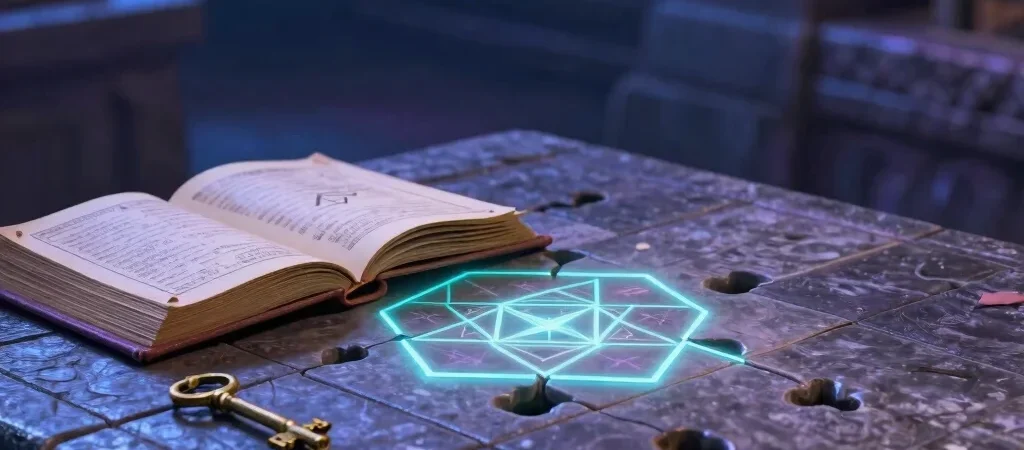
You’ve checked the locked cabinet, tapped the odd painting, and tried the same key on every door. The room hasn’t changed, but your attention may have. Before reaching for a full walkthrough, pause long enough to separate what the game has shown you from what you’re guessing.
Take inventory of the room
Look for details that stand out through repetition, contrast, or placement: a symbol appearing on two objects, a light that changes when you move, or a note that names a color without explaining why. Then check your inventory against those details. Adventure puzzles often become easier when you connect two clues you already found instead of searching for a new one.
It can help to say the problem plainly: the door needs a code, the machine needs power, or the statue is missing something. That sentence narrows the question without giving away the answer. If you can’t describe what you’re trying to solve, revisit the room and gather more information first.
Test one idea at a time
Randomly combining every item with every surface can turn a thoughtful puzzle into a blur of clicks. Instead, choose one plausible connection and test it: does the metal tool interact with the loose panel, or does the marked page explain the dial? A clear response from the game gives you evidence; no response is useful too, because it lets you move on.
Keep track of what changed after each attempt. A sound, a new animation, or a newly opened route may be the game’s way of confirming progress, even if the next step is not obvious yet. Small feedback is easy to miss when you’re testing several guesses at once.
Use hints without losing the fun
If you’re still stuck, ask for the smallest hint that would get you moving: which room matters, which object deserves another look, or what kind of connection to consider. A good hint points your attention in a direction without doing the satisfying work for you. Save a full solution for when you’d rather see the rest of the story than keep working on the obstacle.
When you return to the puzzle, try the hint as a question, not an instruction. What did you overlook? Which assumption can you test? The answer may be one careful observation away.